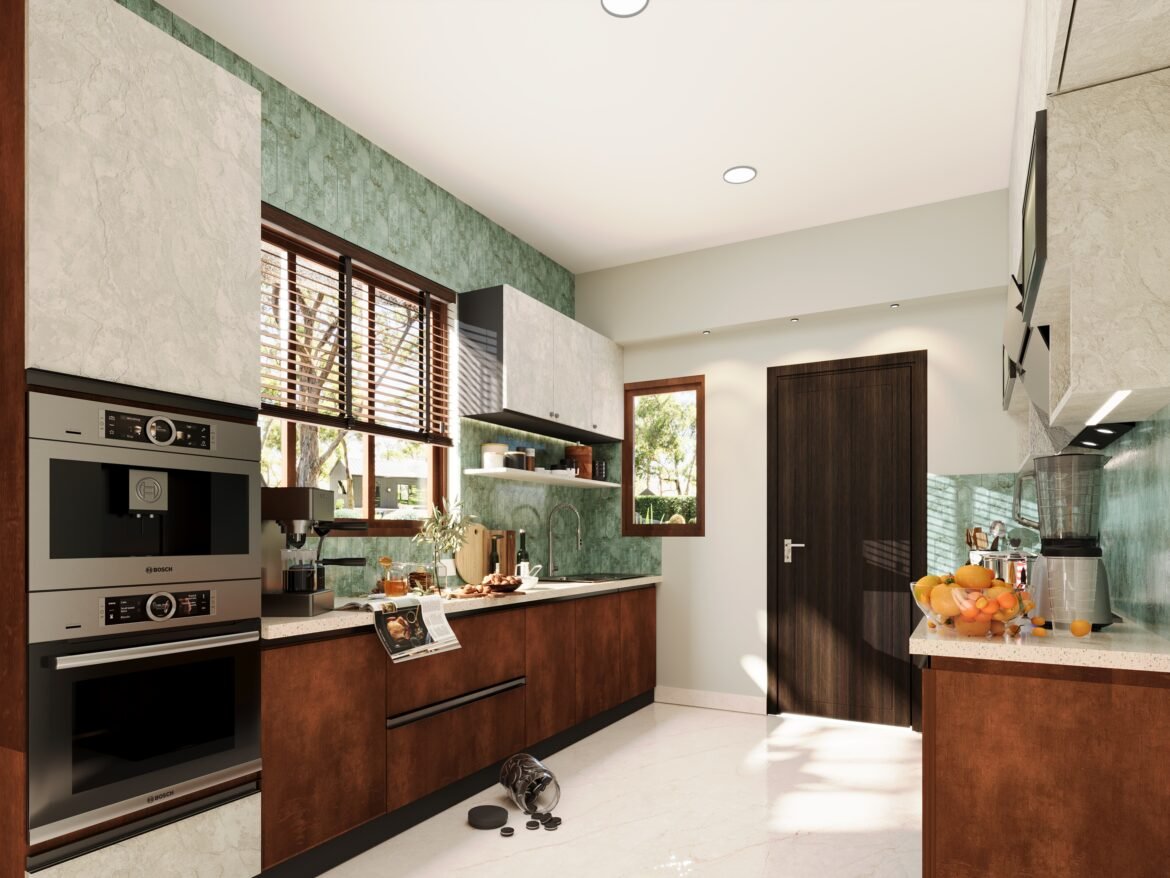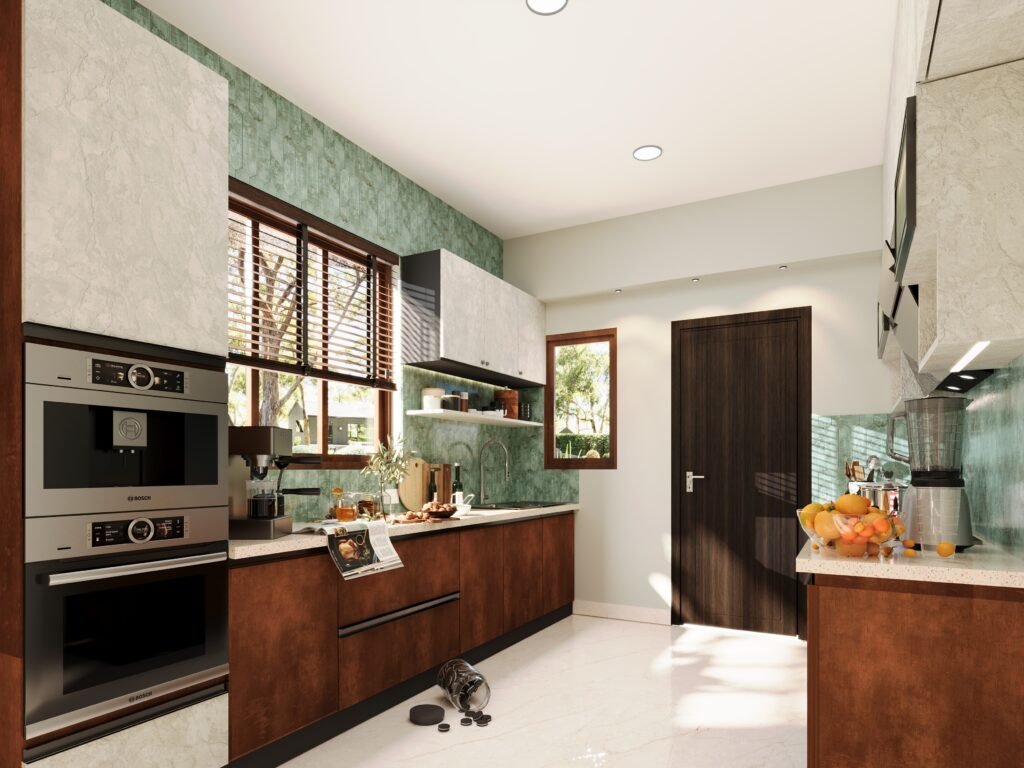
The kitchen is now the real heart of the modern home. Multifunctional kitchen design means this one room has to work for cooking, working and hosting, often all in a single day. It needs to feel calm and beautiful while still being practical enough for real life.
In this architects guide to multifunctional kitchen design, we will walk through how to plan a kitchen that works hard without feeling chaotic. You will see how to organise zones, plan the layout, choose storage and lighting, and then finish the space with furniture and decor pieces from Arc Milano that make it feel warm and personal
How to plan multifunctional kitchen design with three clear zones
Before you think about colours or finishes, decide how the kitchen needs to work in everyday life. The easiest way to start multifunctional kitchen design is to break the room into three overlapping zones for cooking, working and hosting.
The cooking zone covers the hob, oven, fridge and main preparation surfaces. These should sit in a compact working triangle so you can move quickly and safely between them while you cook. When the key appliances are too far apart, cooking becomes tiring and the space feels less considered.
The working zone can be a small desk nook or a section of the island or peninsula. You only need space for a laptop, power sockets and a comfortable seat. Visual separation is the secret here. A shallow return wall, half height shelving or even a change in wall colour can help this part of your multifunctional kitchen design feel like a real workspace, not an afterthought on the worktop.
The hosting zone is where people naturally gather. It might be an island with stools, a dining table with bench seating or a cosy corner with upholstered chairs. This zone should look towards the kitchen so guests feel connected to the action. At the same time, it needs to stay out of the main cooking route so people do not bump into the person at the hob.
Imagine these three zones as circles that touch but do not sit on top of each other. When you walk the room in your mind and each activity has its own place, your multifunctional kitchen design is already halfway there.
Layout tips for a multifunctional kitchen that feels calm
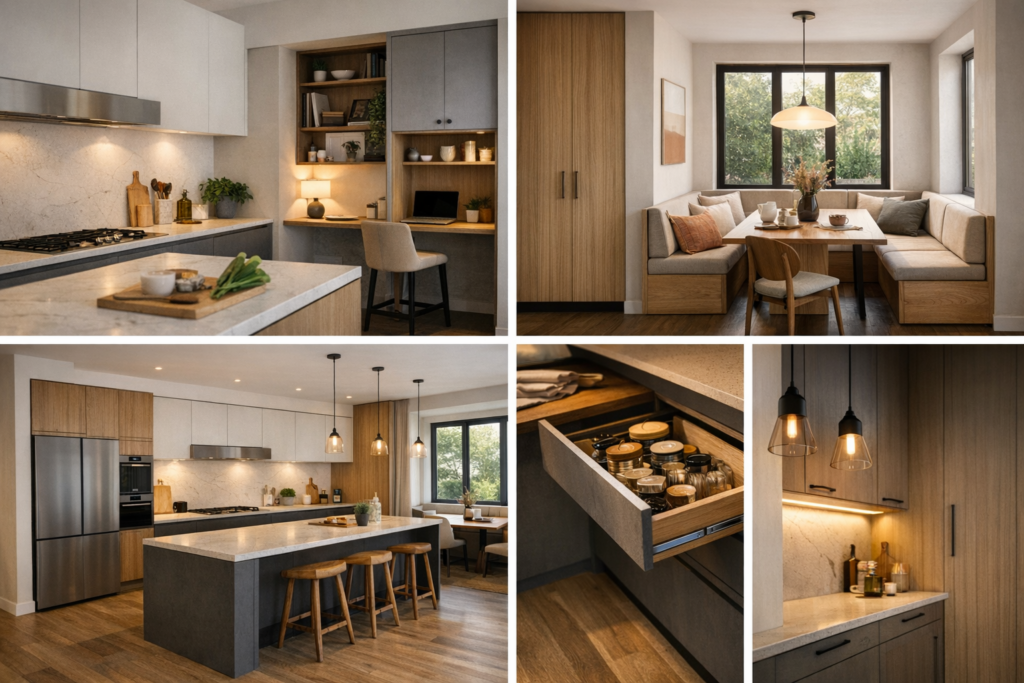
Many people start by thinking about cabinet sizes. An architect will always begin with how you move through the space. Good layout is about reducing friction and making every route feel natural.
Start with the way you enter the kitchen. When you walk in, where do bags, post, keys and groceries go. If this is not planned, everything lands on the island or the closest surface. A tall cabinet, a shallow console or a simple bench with hooks can become a dedicated drop zone and keep the core of your multifunctional kitchen design clear.
Next sketch the cooking route. Picture the path from fridge, to sink, to hob and oven. Keep this route free of bar stools and dining chairs. A U shape or an L shape with an island usually gives a smooth flow and keeps everything within an easy reach. If you are working with a smaller space, you can also look at online guides to multifunctional kitchen layouts, such as this independent guide to multifunctional kitchen design, for extra ideas. Link that phrase to:
Then plan the route for serving and hosting. From the hob and oven, there should be a direct surface where food can land before it reaches the table or island. Try to avoid forcing guests to cross the tightest cooking area to get to their seats. In a well resolved multifunctional kitchen design, the cook can move freely while everyone else has a natural path to sit down.
Finally think about the working route. Someone using a laptop in the kitchen needs a comfortable seat, natural light and power. Ideally they can come and go without blocking appliances or storage. If your working nook is at the end of a tall run of cabinets or tucked beside a window, it becomes part of the room without sitting in the main circulation line.
When you can imagine yourself walking through the kitchen on a busy weekday and nothing feels in the way, you know the layout is supporting your multifunctional kitchen rather than fighting it.
Use furniture to define zones in multifunctional kitchen design
In many modern homes the kitchen sits inside a larger open plan space. There are fewer walls, so furniture and built in elements have to do more of the work of definition.
The island often becomes the pivot point of the whole room. On the kitchen side it can hold the hob, sink and main preparation surfaces. On the living side it can offer an overhang with stools and a view towards the dining and seating areas. A slight change of material on the bar side, or a slim upstand on the working side, is enough to signal the shift from cooking zone to social zone in your multifunctional kitchen design.
Built in seating is a clever way to define the hosting area without using much floor space. A bench along a wall or under a window frames a dining table and instantly tells people this is where you sit and relax. Under seat storage is perfect for hiding bags, toys and table linen, keeping the main kitchen surfaces looking clear. At Arc Milano you can pair a simple built in bench with sculptural Italian inspired dining chairs and a characterful table to give this corner its own identity while still matching the rest of the room. Link that phrase to your dining or kitchen category on your own site when available.
If you need a working spot, consider a shallow built in desk that can close behind doors when you are finished. Pocket doors, sliding panels or even a tall cabinet with a fold down surface can hide your laptop, papers and cables in seconds. This is a small but powerful move in multifunctional kitchen design because it allows the room to shift from work mode to hosting mode without a visual clash.
Freestanding furniture can also become a gentle room divider. A low sideboard, open shelving or a slim drinks cabinet can sit between kitchen and living areas. It defines the edge of the kitchen without blocking light or views. A vintage sideboard or curated shelving unit from Arc Milano can add warmth and character here while helping to frame the different zones.
Storage ideas for a multifunctional kitchen at home
A multifunctional kitchen has to handle more clutter than a traditional one. There are ingredients and pans, but also laptops, school books, cables and everything that comes with hosting. Storage is what keeps the space feeling calm instead of chaotic.
Begin by giving each function its own storage. Cooking needs deep drawers for pans, pull out systems for dry goods and accessible spots for oils and spices. Hosting needs a place for glasses, serving bowls, platters and napkins. Working needs a drawer or small cabinet for tech, stationery and notebooks. When you design these storage areas deliberately, you stop everything from being piled into one overworked cupboard.
Use full height cabinetry to store items you only use occasionally. This includes bulky appliances, extra glassware and seasonal pieces. Keep everyday plates and cups within easy reach and place less used items higher up. In a good multifunctional kitchen design, the things you need most are closest to hand.
Try to hide the practical elements that make the room feel like a back of house area. Bins, cleaning products and laundry can sit behind tall, full height doors. Once you close them, the space instantly feels more like a living room and less like a utility space.
Open shelving still has a place, but it works best in small doses. Use it to display things that look good in groups, such as neatly stacked plates, cookbooks, glass jars or a few beautiful objects. This adds character to your multifunctional kitchen design without overwhelming the eye.
A useful rule is that you should be able to clear most visible clutter from your worktops in about thirty seconds. When storage has been thought through, this becomes very easy.
Lighting that brings multifunctional kitchen design to life
Lighting is one of the most important tools in multifunctional kitchen design. You are asking one room to shift between focused cooking, focused work and relaxed hosting, so it needs several types of light, not just a single ceiling fitting.
Task lighting comes first. You need bright, even light over worktops, the hob, the sink and the main preparation zones. Under cabinet LED strips, discreet ceiling spots and well positioned pendants make it easier and safer to cook. Try to avoid leaving shadows on the worktop where you chop and mix.
Ambient lighting sets the overall mood. This can come from ceiling fittings, wall lights or a track system that gently washes light across the room. Put this lighting on dimmers so you can move from daytime brightness for cooking to softer levels for evening meals and drinks.
Accent and working lighting adds the final layer. A small table lamp on a sideboard or at a built in desk creates a focused pool of light and makes the room feel more like a living space. Subtle lighting inside shelving or under the bar side of an island adds depth and a sense of luxury. When you choose lamps and wall lights, you can draw on the Arc Milano collection to introduce texture and sculptural forms that complement the rest of your decor.
If you put task, ambient and accent lighting on separate controls, it becomes very easy to shift the room from cooking to working to hosting with just a few changes at the switch.
Choosing materials and furniture for multifunctional kitchen design
Because the kitchen now sits beside living and working spaces, it has to feel more like refined furniture and less like a purely functional zone. Materials and furniture choices are key.
Start with a simple palette and repeat it. For example, you might choose warm wood fronts, soft off white walls and a stone or stone effect worktop. If you then bring the same wood tone into your dining table, sideboard or shelving from Arc Milano, the whole space feels calm and connected. This is one of the foundations of successful multifunctional kitchen design.
Choose worktops, splashbacks and flooring that can cope with both everyday cooking and regular hosting. Surfaces should be easy to wipe down and comfortable to live with. Matt finishes often feel softer and more natural than high gloss, which helps the kitchen sit comfortably next to sofas, artwork and fabrics.
Pay attention to details. Slim framed doors, integrated handles and carefully finished end panels all help your kitchen read as a piece of fitted furniture. When you place it next to a vintage cabinet, an upholstered bench or sculptural dining chairs from Arc Milano, the room feels intentionally layered rather than pieced together.
Think about sound as well as sight. Hard surfaces can make a family kitchen echo. Upholstered dining chairs, curtains, a bench cushion and rugs in the adjacent living area all help to soften the acoustics and make the space more pleasant to spend time in.
The aim is for your multifunctional kitchen design to feel like one coherent interior, not a separate room bolted onto the rest of the home.
Making the working area feel intentional
Many people work at the island by default because it is the most obvious surface. Without a plan, this can feel temporary and messy. A few thought through decisions can make working in your multifunctional kitchen feel natural.
Start with power. Place sockets where you actually sit, such as in the side of an island, at the back of a drawer or in a neat pop up fitting. This lets you plug in laptops and phones without trailing cables across walkways.
Consider sightlines. If possible, place the working nook so that a laptop screen is not the first thing you see when you enter the space. A short return wall, a bookcase end or a cabinet that can close helps the work area become more discreet when you are off the clock.
Choose seating that matches how long you will use it. If you only answer a few emails at the island, a comfortable stool is fine. If you spend several hours working, consider a standard height table or a dedicated desk area with a proper chair. You can mix a compact desk with an Arc Milano chair that looks as good as it feels.
Finally, make it easy to clear down. Give the working zone its own drawer or cabinet for the laptop, chargers and paperwork so you can switch the room back to cooking and hosting mode in minutes. This is exactly the kind of small detail that makes multifunctional kitchen design feel effortless in daily life.
Creating a natural hosting experience in your multifunctional kitchen
The best multifunctional kitchens make guests feel relaxed even when cooking is still happening. The space should invite people in while still working well for whoever is preparing food.
Give guests somewhere to perch that is close enough for conversation but not in the way of the cook. The far side of the island, a bench along one wall or a pair of comfortable chairs work well. People can sit, watch and chat without blocking important doors or drawers.
Create a simple self service area so guests can help themselves. This might be a corner of the worktop with glasses and a tray, a dedicated bar cabinet or an elegant dresser. A vintage sideboard or bar unit from Arc Milano can hold bottles, glassware and small plates, turning this part of your multifunctional kitchen design into a mini destination.
If you have space, choose a dining table that can extend or rearrange easily. That way you can move from everyday family dinners to larger gatherings without completely reworking the room. A flexible table, paired with a mix of chairs and a bench, offers relaxed seating for different occasions.
Use lighting and sound to set the tone. Dimmers, a couple of warm table lamps and a small speaker on a shelf or sideboard can shift the atmosphere from bright and busy to soft and intimate in seconds. If you want more ideas on how to plan a functional kitchen, you can also read independent tips for designing a functional kitchen as an extra reference alongside this guide. Link that phrase to:
Example multifunctional kitchen design layout
Imagine a rectangular open plan space with the kitchen along one long wall and a large window at the short end of the room.
Along the wall, tall units at one side hold the fridge, oven and pantry storage. Below, a run of base cabinets with a continuous worktop leads towards the window, with the sink placed under the natural light. This creates a clean, continuous cooking zone that is easy to move around in.
In the centre of the room sits an island, parallel to the main run. The kitchen side holds the hob and preparation space. The opposite side faces the living area and offers an overhang with stools for casual seating. This island becomes the natural link between cooking and hosting within your multifunctional kitchen design.
By the window, a built in bench wraps around a dining table to form the main hosting zone. You can dress this area with cushions, artwork and a mix of dining chairs from Arc Milano to add character and comfort.
At the opposite end of the kitchen wall, a shallow run of tall storage includes a pocket desk that can close when you finish work. When the doors are shut, the working area disappears and the room looks ready for evening.
This simple layout shows how multifunctional kitchen design can give every activity a clear place within one open plan space.
Bringing your multifunctional kitchen design to life with Arc Milano
Multifunctional kitchen design does not need to be complicated. When you plan three clear zones, smooth routes, thoughtful storage, layered lighting and a simple material palette, the room will quietly support everything you want to do.
Cooking, working and hosting all become easier because the space has been shaped around real life. At that point, the kitchen stops feeling like just a collection of cabinets and starts to feel like the true centre of the home.
When you are ready to bring your own multifunctional kitchen design to life, Arc Milano can help you layer in characterful furniture, lighting and decor. From vintage sideboards and dining tables to sculptural chairs and lighting, each piece adds warmth and personality to a kitchen that already works beautifully.